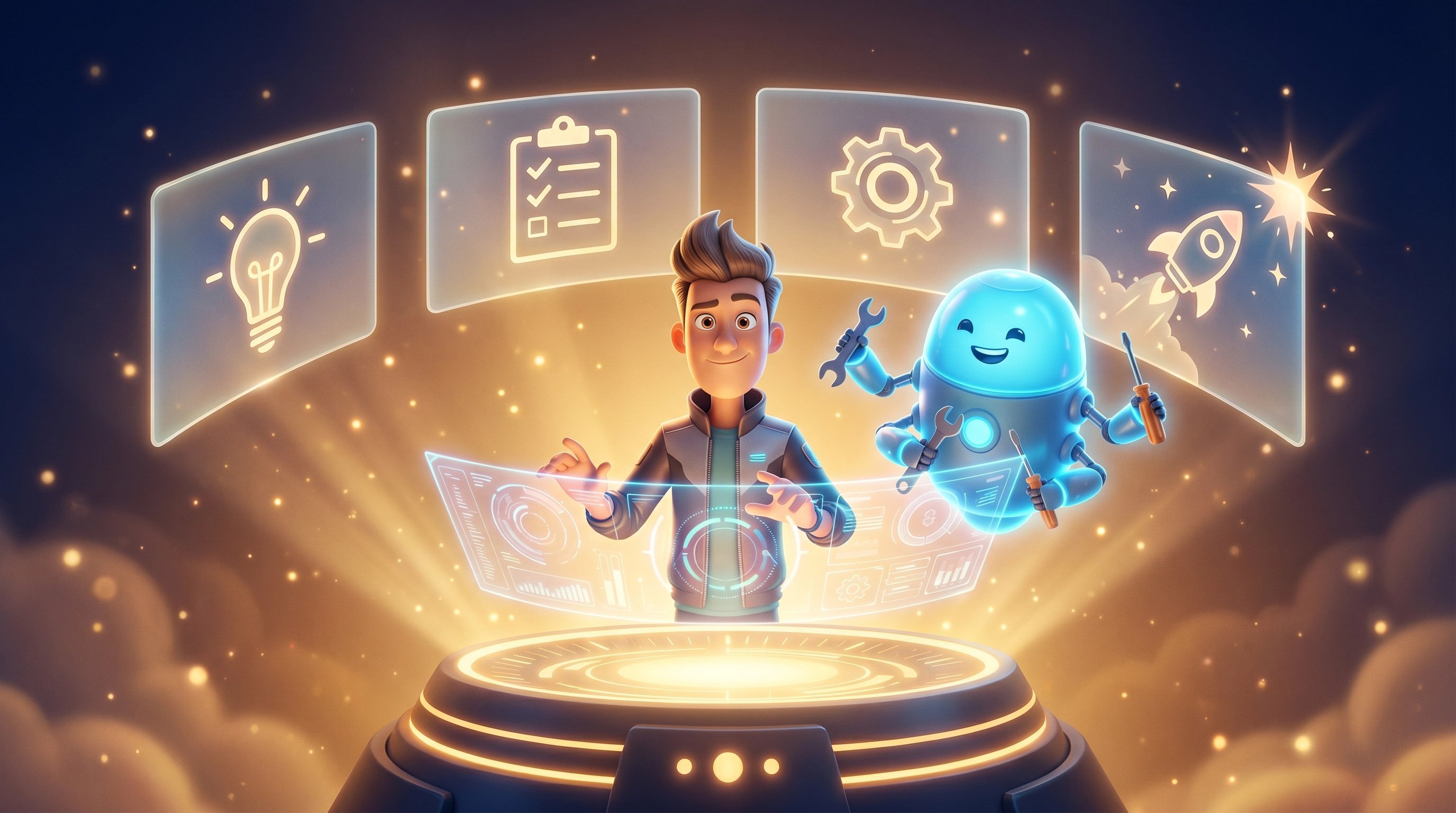
On a Friday afternoon, a colleague asked me how long it would take to redesign my single-product website. My answer — four to seven days — came out without hesitation. But the truth is, that number did not come from a formal estimate or a project plan. It came from instinct. An instinct shaped by two full years of working alongside AI: learning through trial, through error, through genuine frustration, and eventually through something that felt a lot like clarity.
The first attempt at that website redesign was, to put it plainly, chaotic. Ideas moved faster than structure. Prompts were inconsistent. Direction shifted too often. The work got done — but the process was messier and harder than it ever needed to be.
What changed was not the technology. What changed was the working relationship.
1. The Turning Point
Before starting the next website redesign, I made a deliberate decision: set the ground rules first. Instead of jumping straight into outputs — the usual instinct — I began with a clear plan for how the collaboration would actually work.
The human would be the driver, the initiator, and the creator. AI would be the implementer — while also contributing ideas, structure, and creative support. That distinction, as simple as it sounds, changed everything.
It created clarity. It reduced noise. It gave the project a rhythm. And most importantly, it made the work feel intentional rather than reactive.
Setting ground rules before the first prompt is not a formality — it is the single most effective thing you can do to improve the quality of everything that follows. Structure before speed. Always.
2. What This Proved
This experience proved something I now consider fundamental: AI works best when it is guided by human direction, human judgment, and human ownership.
AI is powerful, fast, and often surprisingly creative. But without clear human leadership, it can become unfocused, repetitive, or misaligned with what you actually need. When the human sets the vision and defines the rules of engagement, AI becomes far more useful. It shifts from being a tool that produces random output to a collaborator that helps move a real project forward.
That was the game changer.
When the human sets the vision and the rules of engagement, AI becomes a genuine partner — not just a tool.
3. Why the Process Matters
Most people focus on what AI can produce. Fewer people think carefully about how they should work with it. That 'how' matters more than most people realize.
A strong outcome does not come only from good prompts. It comes from a clear process, defined roles, shared expectations, and steady decision-making. In this case, the process created momentum, improved communication, and gave both the human and the AI a better chance of succeeding within the intended deadline.
The difference between a frustrating AI experience and a productive one is almost never the model. It is almost always the structure — or the absence of it.
The teams and individuals who understand this will consistently outperform those who treat AI as a shortcut.
4. A Practical Working Model
The experience distilled itself into a model that is simple enough to remember and practical enough to actually use. It applies not just to website design, but to writing, strategy, product development, planning, and creative work of all kinds.
The human sets the vision.
The human defines the priorities.
The human makes the decisions.
AI executes, expands, suggests, and refines.
The project succeeds when both roles stay clear.
Apply this model at every level of work — from a quick email draft to a full product launch. Each project sharpens your instincts. Each clear brief produces a better output. Structure compounds. Start now.
5. Final Thought
The most valuable lesson was not that AI can help build a website quickly. It was that human-led collaboration with AI can transform a messy, reactive process into a focused, intentional one.
That realization felt profound — not because it was surprising in theory, but because it changed something in practice. It changed the way future work could be approached. It changed the questions I asked before starting. It changed the confidence I brought to the estimate I gave my colleague on that Friday afternoon.
This is what we humans need to understand about AI. It is not a replacement. It is not a shortcut. It is a tool that we collaborate with — one that, when guided well, can help us achieve things that once felt out of reach.
AI does not make the work easier by doing it for you. It makes the work better by amplifying what you bring to it. Lead with purpose. Define the roles. Trust the process. The results will follow.